

The Liar-in-Chief
How Netanyahu’s Disinformation Machine Warps Policy, Wrecks Ceasefires, and Deepens Gaza’s Hunger

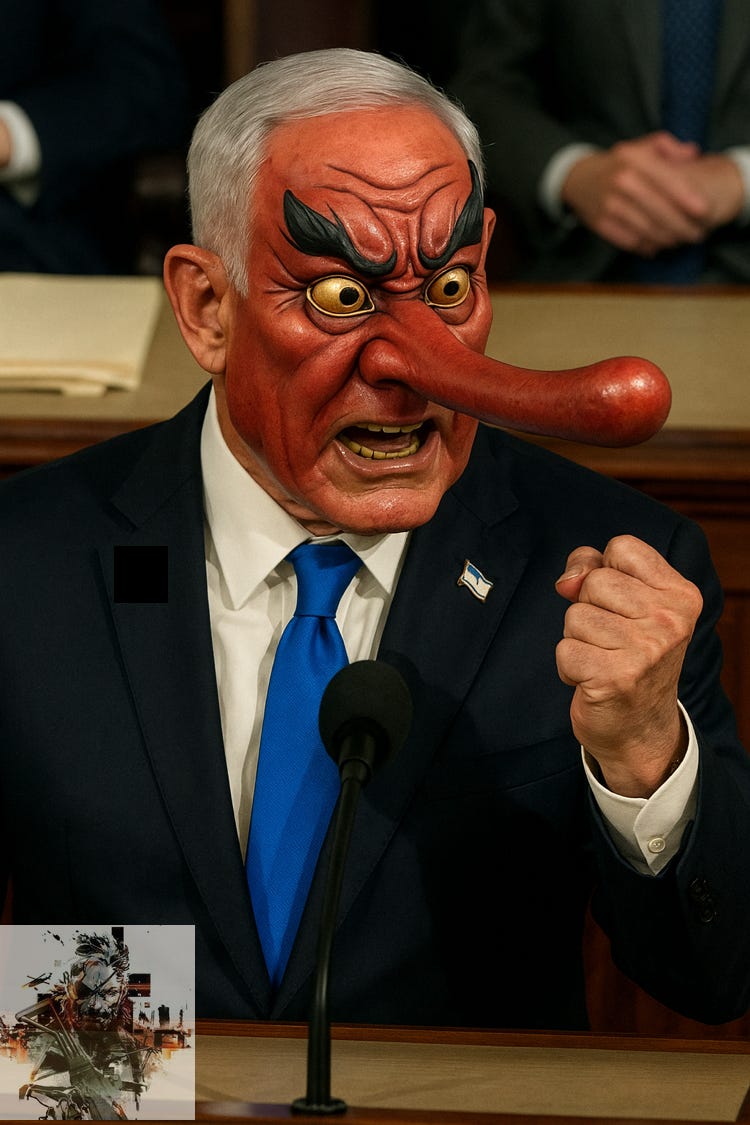
In early September 2024, as mediators shuttled between Cairo hotel suites trying to stitch together a fragile truce, a sensational “scoop” blasted across Europe’s biggest tabloid: Yahya Sinwar was planning to slip into Egypt with Israeli hostages. The story, published by Bild, didn’t end the war—but it poisoned the room. Trust cratered, talks stalled, airstrikes resumed. Two months later German authorities opened an investigation into the leak, and by July 2025 The New York Times traced the rumor’s path back to associates of Prime Minister Benjamin Netanyahu, an episode emblematic of a governing style in which the first reflex is to mislead, the second is to deny, and the third is to move the goalposts.
This is the story of a pattern: propaganda as policy. A communications apparatus that seeds doubt faster than facts can catch up—and a human toll measured in missed cease-fires, blocked aid, and grieving families for whom every walk-back arrives too late.
The Playbook: Five Steps of Netanyahu-era Disinformation
1) Preempt with a headline. When scrutiny looms—be it war-crime probes, famine warnings, or cease-fire negotiations—Netanyahu’s team invariably seeds a sensational claim to hijack the frame. The Bild leak during the Cairo talks remains the playbook prototype, as do sweeping denials of famine and dramatic assertions that Hamas “booby-trapped” entire neighborhoods to preemptively justify mass destruction.
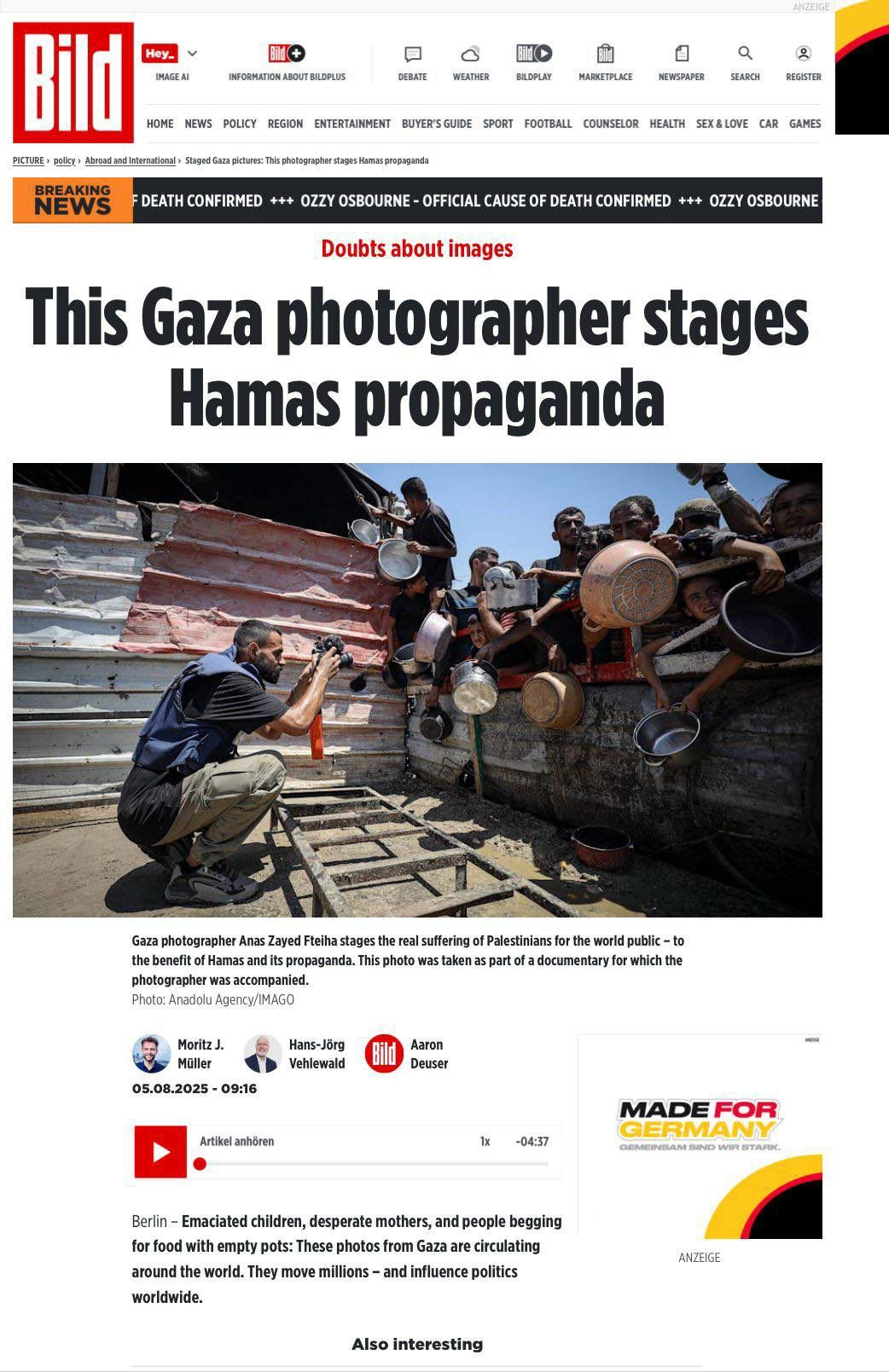
Now, as of August 5, 2025, this tactic has returned in darker form: Bild has become the leading voice in Israeli social media’s campaign to deny and delegitimize starvation in Gaza—circulating doctored images of Palestinians “acting out hunger” to undermine the suffering. This is pure Spectracide—making suffering a spectacle—and Thanacide—dimming the world’s conscience so that denial becomes the default.
2) Make verification hard. Restrict access for independent reporters and humanitarian monitors; then cite the absence of corroboration as proof your version stands. Israel barred most foreign journalists from independent entry to Gaza for months, except on tightly controlled military embeds—a policy criticized by press-freedom groups and challenged in Israeli courts.
3) Shift the blame. When civilian harm surfaces, the script rolls out: Hamas looted aid (the biggest lie—debunked even in Israeli media); civilians ignored so-called “safe corridors”; militants hid behind hospitals; “secondary explosions” sparked the fires. Yet case-by-case forensic evidence routinely dismantles these blanket claims.
4) Quiet revision. Under pressure—from satellite analysis, NGO documentation, video evidence—officials soften or reverse earlier lines: “professional failures,” “stray tank fire,” “likely Israeli fire.” These revisions draw far fewer clicks than the initial claim, but they land—after the funerals—as the closest thing to truth the public will get.
5) Move the goalposts. With the narrative muddied, reset the debate around a new headline. Buy time. Erode trust in independent scrutiny. Exhaust audiences who might otherwise demand accountability. Rinse, repeat.
From Strategy to Catastrophe:
How Key Deceptions Paved the Road to Spectracide & Thanacide
The escalation in Gaza was not a chain of random tragedies—it was engineered through deliberate acts of narrative manipulation, diplomatic sabotage, and propaganda laundering. Each major deception was a gear in the same machine: prolonging bombardment, blocking aid, and eroding public outrage until mass civilian death became normalized background noise. These weren’t isolated PR tricks—they were operational moves that directly shaped battlefield timelines, humanitarian access, and the survival odds of civilians.
Below are the most consequential cases—moments when information warfare didn’t just influence the war, but materially extended it, deepened the devastation, and laid the groundwork for what we now name Spectracide (genocide as spectacle) and Thanacide (the metaphysical collapse of moral conscience).
The Bild Leak That Sabotaged a Truce (and Why It Mattered)
The claim. As mentioned earlier, here’s a quick recap: On Sept. 5–6, 2024, BILD blared that Sinwar would flee into Egypt with hostages — a claim quickly echoed by The Jewish Chronicle. Soon after, German authorities opened a probe into who planted the story. Months later, NYT reporting revealed how Netanyahu’s allies weaponized such leaks to prolong the war and sabotage diplomacy.
Why it mattered. Every sabotaged round of talks wasn’t just a diplomatic hiccup—it was a death sentence. Each collapse meant fresh waves of bombardment, mass displacement, and aid convoys forced onto routes already designed to be lethal. Netanyahu’s leak was textbook Spectracide: weaponizing the fog of war into a theater of rumors, then using that manufactured spectacle to stall scrutiny, block relief, and quietly extend the killing window. This choreography of delay is why today we count not just statistics, but 18,500 dead children—casualties of a deception that turned negotiations into a tool of extermination.
“There Is No Starvation in Gaza”: Denial Meets the Grim Record
In 2024 and 2025, Prime Minister Benjamin Netanyahu and his senior officials repeatedly denied mounting evidence of famine in Gaza. But a hard chain of authoritative findings paints a starkly different picture.
On March 28, 2024, the International Court of Justice issued provisional measures, warning that “famine is setting in” and ordering Israel to allow unimpeded aid. These measures were based on testimonies from humanitarian organizations and field data indicating systemic deprivation.
By June 6, 2025, the Integrated Food Security Phase Classification (IPC) declared catastrophic food insecurity across Gaza, with every Palestinian in the territory facing crisis or worse. These findings, compiled alongside data from FAO, WFP, and UNICEF, confirmed that hunger was no anomaly—it was universal and escalating.
In an emotionally charged Face the Nation interview just weeks earlier, WFP Director Cindy McCain steamrolled conspiracy claims. Asked if there was any indication that Hamas was stealing aid, she said: “Not at all. These are desperate people. When they see a WFP truck, they run toward it.” Her words made clear: the issue was not theft but starvation—driven by the very policies and checkpoints that denied timely food and medicine.
This isn’t just failure—it’s Thanacide: the gradual erosion of our sense of moral obligation when the state chooses to punish hunger as a crime instead of treating it as a crisis.
Worse still, multiple outlets—from Haaretz to Le Monde—report that Israel deliberately armed and enabled ISIS-linked militias, rather than Hamas, to loot aid convoys. In effect, official policy turned aid trucks from lifelines into bait—and the looting became part of the control strategy. The message was brutal: looting equals chaos—and chaos justifies further restriction.
And here’s the twist that takes deception into absurdity: around the same time, Abu Shabab, the alleged ISIS-linked warlord who orchestrated the aid looting, was inexplicably invited to publish a column in the Wall Street Journal—despite being functionally illiterate in Arabic let alone to be able to write in English! How someone deeply implicated in famine-as-policy got a voice in a major Western outlet is a mystery that goes beyond this investigation—but rest assured, it will be the subject of follow-up.
Smearing Aid: From WCK Tragedy to Manufactured Doubt
On April 1, 2024, seven humanitarian workers from World Central Kitchen (WCK)—including Americans and British nationals—were killed in Gaza. Rather than allow this tragedy to prompt meaningful investigation and accountability, Israeli officials immediately painted WCK as complicit: they claimed that Hamas had intermixed with WCK convoys and that terrorists used the aid trucks as cover. Media outlets parroted the narrative; human rights organizations and surviving colleagues demanded clarity and accountability. Weeks turned into months, and the only official follow-up was vague commentary about “professional reviews” and the dismissal of unnamed individuals—no comprehensive independent investigation was ever launched.
Over a year later, in August 12, 2025, Israeli state media unleashed a new smear: a video surfaced showing armed men driving a vehicle bearing the WCK emblem, implying that the aid organization was being used as a front by terrorists. The footage quickly spread across X and WhatsApp, amplified by pro-government commentators as “proof” that WCK’s supposed neutrality was a sham.
But the case is hollow. No verification was provided; no independent journalist was granted access to investigate. Instead, critics—myself among them—pointed to earlier precedents of IDF deceptive tactics, such as the undercover raid at Jenin’s Ibn Sina hospital, as proof of the regime’s willingness to manufacture visuals to muddy truth. The Associated Press, Washington Post, and a UN Commission of Inquiry verified misuse of protected medical insignia and spaces. The Spectracide mechanism was in full effect here: the smearing of humanitarian actors became a political spectacle, where repeated claims replaced verification, and doubt became a policy.
Retractions and Quiet Admissions: A Steady Trail of “Mistakes”
The narrative control rarely admits fault upfront. In March 2025, fifteen paramedics responding to an emergency were killed. Israeli authorities initially hinted that the ambulance convoy was suspicious. Then, when video and eyewitness evidence emerged, the narrative shifted to a vague declaration of “professional failures,” and some officers were quietly dismissed. For the families, the corrections came far too late—weeks after they had lowered coffins into the ground.
In July 2025, the only Catholic church in Gaza City, the Holy Family compound, was struck. Initial statements dismissed the attack, followed by denials and obfuscation. Days later, the official explanation attributed the deaths to “stray tank fire.” Church leaders and eyewitnesses strongly disputed this, pointing out that the priest was among the injured—a grim contradiction to the sanitized explanation. (Reuters, July 2025, The Washington Post).
Going further back, the killing of Shireen Abu Akleh on May 11, 2022, exemplifies how critical narrative control can be. Initial official statements pointed fingers at Palestinian militants. Only after months—and under mounting pressure—did investigations by CNN, the UN, and U.S. agencies confirm that she was likely shot by Israeli forces while clearly wearing PRESS insignia. The IDF’s eventual admission came not as a reckoning, but as a footnote.
And when a massive fire erupted in a tent camp in Rafah in May 2024, initial Israeli messaging blamed “secondary explosions.” Investigations by The New York Times Visual Investigations and Human Rights Watch contradicted that narrative, documenting clear evidence of a direct strike instead—yet the original deflection remained in many public accounts.
In each case, corrections, retractions, or soft reversals came only after the narrative had already done its damage. That is Spectracide—when denial and spectacle outrun truth—and Thanacide—when acknowledgment of wrongdoing comes only once it’s too late to matter.
Why the Lies Keep Paying: Politics, Law, Incentives
This isn’t just spin; it’s a political survival strategy. Haaretz and other Israeli outlets have documented how Netanyahu funding Hamas as a counterweight to the Palestinian Authority—a “divide and rule” approach security veterans have decried for years. In that logic, diplomacy matters less than narrative victories at home. Meanwhile, the ICJ has ordered Israel to facilitate aid; the ICC has pursued warrants alleging crimes tied to obstruction. In that legal context, denying famine, blaming victims, and smearing aid groups are not random talking points—they are shields against liability.
Spectracide and Thanacide — Naming the Damage
Spectracide is the spectacle-weaponization of violence—where imagery, leaks, and orchestrated talking points overwhelm fact. A tabloid headline about “Sinwar’s escape” dominates the cycle before negotiators can correct it. Aerial footage and selective clips are pushed to foreign outlets showing “booby-traps everywhere” in hospitals, priming audiences to see every target as legitimate.
When aid workers from World Central Kitchen are killed, the vacuum is filled with claims of Hamas impersonation—claims later narrowed, reframed, or quietly contradicted, but only after the public appetite for outrage has been fed. By then, the facts arrive too late to reverse the policy choices cemented in that initial rush.
Thanacide is the corrosion of conscience that follows. Starvation in Gaza is recast as a civilian choice to “ignore safe corridors.” Paramedics and journalists are reframed as combatants. The bombardment of Gaza City’s only Catholic church—located in territory the International Court of Justice recognizes as occupied—is waved away as “stray” fire despite witness accounts to the contrary.
Over months, the vocabulary of moral judgment thins out; words like “indiscriminate” and “collective punishment” lose their sting. In that vacuum, policies that would once have been unthinkable become administratively routine.
What Accountability Would Look Like—Concrete Steps
Primary & Non-Negotiable: End the Media Blackout
Unrestricted, secure entry for international journalists to Gaza—without state escort or censorship—to witness, verify, and publish in real time.
This is the single most effective deterrent against both atrocities and the recycled propaganda used to justify them. Every past massacre in history that escaped scrutiny did so behind a media blackout. Ending this blackout would end the ongoing Spectracide and Thanacide—because the truth, in full view of the world, is the greatest safeguard against annihilation. Gaza cannot afford another day hidden from the global eye.
Secondary but Urgent Measures
Independent, time-bound fact-finding with full evidentiary access, including raw strike data and targeting assessments, under international oversight—not podium statements.
Cease-fire talks protected from political sabotage, with penalties for any party caught seeding disinformation to derail negotiations. The Bild leak should serve as a precedent for consequences.
Legal enforcement where evidence confirms unlawful attacks or starvation as a method of warfare—including full cooperation with ICC investigations and implementation of ICJ measures.
Breaking the Cycle
Netanyahu’s information war is not an accessory to policy; it is policy. The leak that kills a cease-fire. The denial that delays a convoy. The smear that chills an aid mission. The euphemism that tidies up an atrocity. Each step buys time, shifts blame, and keeps the machinery turning—spectacle first, conscience later, if ever.
Democracies do not survive on the strength of their press rooms. They survive on the strength of their capacity to correct themselves. That starts with refusing to let disinformation set the agenda. Call the Bild leak what it was: a politically useful falsehood that cost lives. Call famine denial what it is: a shield for policy failure measured in children’s bodies. And call the governing style by its name: a liar-in-chief culture that must be forced to yield to facts, to law, and to a public that refuses to be numbed.
The cycle can be broken—but only if we stop mistaking the spectacle for the truth, and insist that the truth, however unglamorous, is what governs.
SUPPORT NOTE
The Phantom Directive will always remain free in principle.
Truth and public awareness should never be gated.
But the investigative work behind these chapters,
the deep research, verification, forensic analysis, and the ongoing fight against coordinated suppression,
exists only because readers choose to sustain it.
If you’re able to become a paid subscriber, you directly strengthen the mission.
If you prefer a one-time gesture, you can buy me a coffee:
buymeacoffee.com/phantompain1984
If neither is possible, sharing this investigation is still an act of resistance.
Every form of participation matters.
The system depends on quiet. This project depends on refusal.
— Phantom Pain