

Spectracide and Thanacide
Genocide is no longer enough. We need new language for a new kind of death.

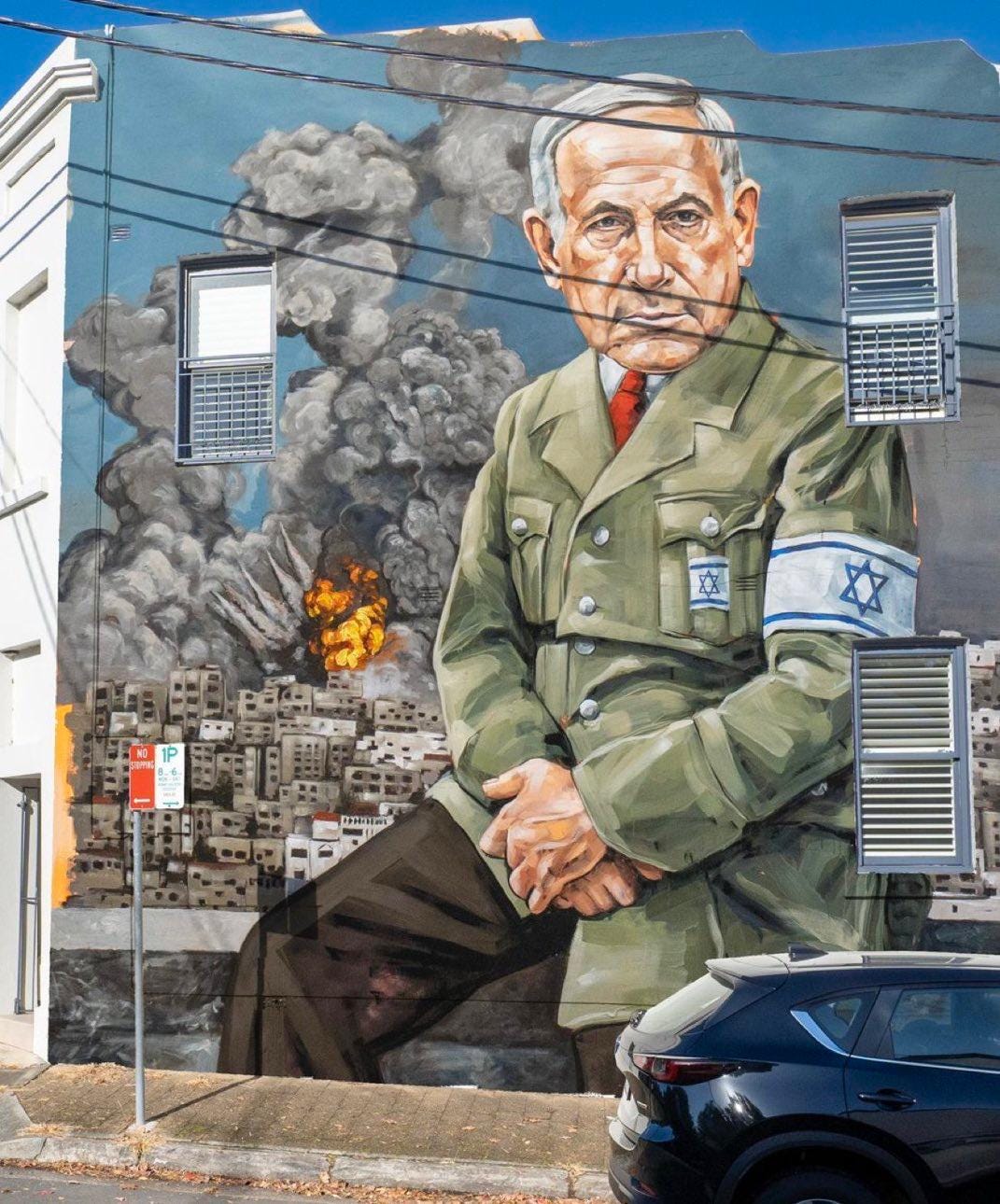
There are moments in history when the vocabulary we inherit collapses beneath the crimes it is asked to describe. “Genocide” is a word forged in the fire of the 20th century to name the unnameable. But what happens when even that word begins to feel like a blunt instrument — too blunt to hold the shape of what is happening now?
What we are witnessing in Gaza is not merely the annihilation of a people — it is the performance of annihilation. It is death staged for an audience, then sold back to that same audience as proof, spectacle, and moral clearance. And beyond the corpses lies something even darker: a spiritual death. A collapse not only of buildings and bodies, but of conscience, civil memory, and moral language.
We propose two related terms to name these twin phenomena. Use either. Use both.
Spectracide
The killing of a people as spectacle.
Etymology / form: specter / spectacle + -cide (killing). Spectracide names the act of turning mass death into visual performance — death that must be seen, packaged, captioned, and distributed.
Coined from the root specter (ghost, haunting image, or spectacle) and -cide (killing), Spectracide names the act of turning mass death into visual performance.
This is not covert killing. This is lighting the scene.
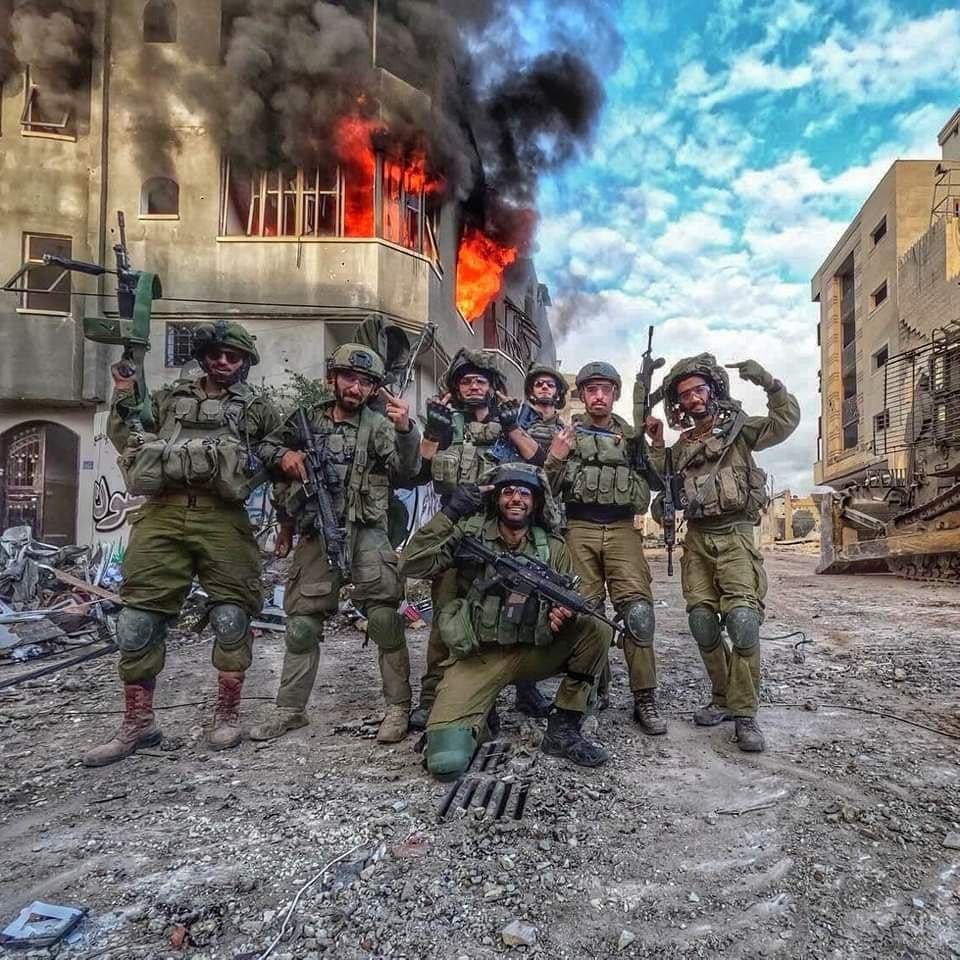
Spectracide — the performance of annihilation, where killing is not only done but staged, packaged, and broadcast as part of the war itself.
Drone footage is turned into branded evidence. Official clips of strikes are released, narrated, edited, and circulated as “proof” of precision — the murder of human beings marketed as military competence. The Water Melon Crimes archive now holds thousands of such pieces of media. Among them is one I will never forget: IDF soldiers filming the corpse of a Palestinian, letting dogs tear into it, laughing as they record.
To show how this operates as policy, not exception, I will focus on a tragic story that affected me the most:
The IDF uses drone strikes not just as weapons — but as spectacle. In the video above as a chilling example, Amit Segal, a close Netanyahu advisor and prominent Israeli journalist, posted drone-kill footage on Telegram with a single word: “Gaza.” No name. No context.
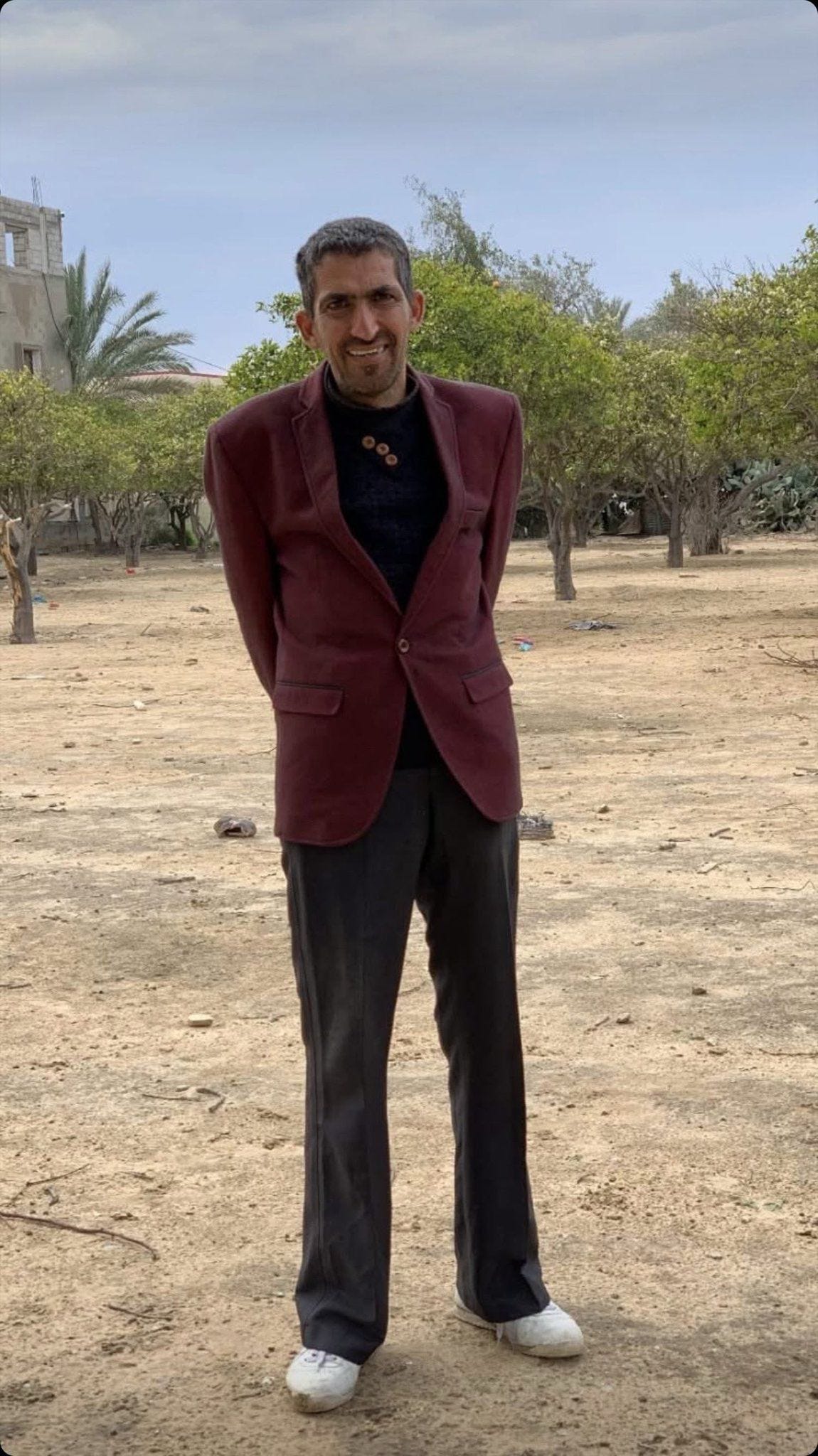
The video shows a man, clearly starving, walking alone. Days later, his sister identified him: Mohammad al-Farra, a man with special needs from Khan Younis. The question lingers like poison: Why kill one disabled man with a missile? Why such brutal force?
His sister, Heba al-Farra — a popular TikTok chef with over 800,000 followers — publicly mourned him. Their family had already been devastated months earlier when an Israeli airstrike killed their father and four siblings.
This is the core of Spectracide: human lives erased, then recycled into propaganda reels while the world scrolls past. Mohammad was not a statistic. He was a son, a brother, a man with dreams and dignity — executed for an audience.
Haaretz — “Operation Salted Fish”: Spectracide made procedure
Haaretz reported that soldiers operating near GHF food-distribution sites in Gaza were ordered to fire on crowds of unarmed people trying to get food — and that in at least one unit, the slaughter of starving civilians was given a cynical nickname: “Operation Salted Fish.”
One whistleblower told Haaretz plainly: “I’m not aware of a single instance of return fire. There’s no enemy, no weapons.”
The term “Salted Fish” is not random. According to the whistleblower, it’s the Israeli military’s twist on a children’s stop-and-go game — essentially their local version of “Red Light, Green Light.” To most readers, that’s the same deadly game dramatized in the Squid Game TV series: players run toward a goal but are “eliminated” if caught moving at the wrong time. In fiction, it was shocking enough. Here, it’s real — only the “elimination” is a bullet, the “players” are starving civilians in Gaza, and the “goal” is a sack of flour. The Israeli version folds lethal force into the language of play, collapsing the distance between a massacre and a joke.
Read through the lens of our vocabulary, the pattern is unmistakable: this is Spectracide — killing turned into public performance and strategic spectacle.
Why this is Spectracide:
Theatre of the kill. The operation’s nickname openly broadcasts the cruelty: a children’s game rebranded as a live execution drill. The label reduces slaughter to play — the exact logic of spectacle. The crowd becomes a scene, the bullet a prop, the body a visual proof-point. The Haaretz reporting shows this was not accidental chaos but routinized violence (more to this point in the Thanacide section).
Filmed, packaged, disseminated. The modern IDF (and the information ecosystem around it) does not only strike; it records. State videos, drones, and battlefield cams — whether released by the military or taken by soldiers — convert live killing into media assets that are then used to narrate “precision” or to delegitimize civilian testimony. The result is a feedback loop: footage excuses future action and normalizes future footage. Thousands of such clips are archived by open-source investigators, including the Water Melon Crimes database.
Optics as weapon. When a unit can call a massacre “Operation Salted Fish” — an inside joke tied to a children’s game — and then have those scenes enter the feed in raw soldier clips, edited “precision” reels, and social amplification, the atrocity functions as PR. Spectracide weaponizes the algorithm: it makes the horrific look routine, and routine look permissible.
Evidence of pattern, not accident. Independent investigations (medical data, bullet trajectories, eyewitness video) have traced repeated wounding patterns at aid sites and consistent battlefield behavior that humanitarians and clinicians say cannot be explained away as random. That pattern makes the spectacle an instrument — not a byproduct. This pattern’s deeper implications for the collapse of moral and legal restraints are explored in the Thanacide section.
In short: when soldiers are ordered (or permitted) to shoot people queuing for food, when that shooting is joked about using the language of playground games and Netflix death matches, and when the same theatre is recorded and narrated, we are beyond a mere policy failure. This is the deliberate crafting of death as spectacle — Spectracide in its purest form.
We are watching Spectracide: extermination curated for visibility, distribution, and normalization.
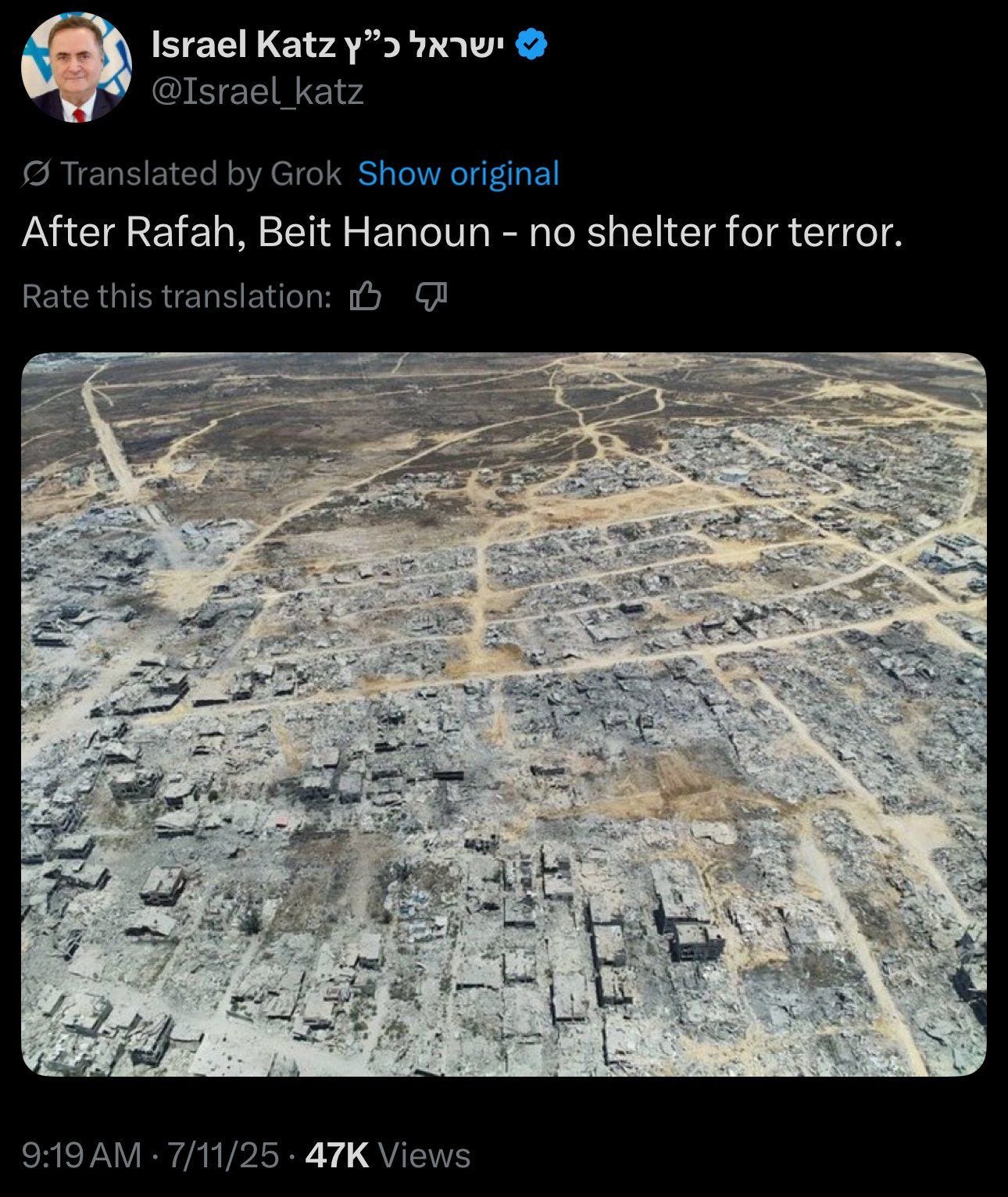
Spectracide does not stop at the moment of killing. It continues in the boasting, in the public display of destruction as a badge of honor. Israel Katz — now Israel’s Minister of Defense and a member of the Security Cabinet — bragged openly on X, posting a drone image of Rafah reduced to a literal apocalypse and captioning it: “After Rafah, Beit Hanoun.”
Spectracide weaponizes attention. It treats the camera as a shovel and the algorithm as an artillery battery. An image circulates faster than a funeral can be held; the image becomes the thing the world remembers — and therefore the thing the world debates. The consequence is brutally simple: when atrocity is produced as content, doubt and procedural questions (“Is it proportionate?” “Is this a military target?”) replace moral action.
But there is a second weapon in this war — one even darker than the spectacle. If Spectracide is the staged killing of bodies for the camera, Thanacide is the policy-driven killing of conscience itself.
Thanacide
The killing of the soul — a broad, spiritual death of conscience, civilization, and moral memory.
Etymology / form: Thanatos (the Greek personification of death) + -cide (killing). Thanacide describes the collapse of the moral architecture that makes human life intelligible as deserving of care: when legal, religious, civic, and journalistic practices either justify, ritualize, or look away from mass killing.
In other words, Thanacide is not just the destruction of life — but the murder of the conditions that make life meaningful.
Thanacide is spiritual death. Not only of the victims, but of the perpetrators — and of the world that watches in silence. It happens when words, rituals, and institutions stop naming life as sacred and instead provide metaphysics for destruction.
From Biblical Annihilation to Modern Military Orders
Political leaders have invoked religious narratives of total extermination to give moral sanction to mass slaughter. The most notorious example came from Israel’s chief genocidal war criminal, fugitive Benjamin Netanyahu.
On October 28, 2023, addressing Israeli troops, Netanyahu said:
“Remember what Amalek has done to you... We do remember.”
He was referring directly to a biblical command in 1 Samuel 15:2–3:
“Thus says the LORD of hosts, ‘I will punish Amalek for what he did to Israel... Now go and strike Amalek and devote to destruction all that they have. Do not spare them, but kill both man and woman, child and infant, ox and sheep, camel and donkey.’”
This is not abstract theology. It is extermination rhetoric — historically coded but presently operational — voiced by the head of government while ordering a military campaign. When an entire population is cast as “Amalek,” sympathy erodes, legal restraints collapse, and permissive rules of engagement emerge. Amnesty International, Human Rights Watch, and multiple Israeli human-rights groups have documented this pattern as an active legal and moral crisis.
The Colonial Origin of Zionism and Arab Jewish Testimony
It must be stated plainly: this is not a native Middle Eastern Jewish tradition. Zionism, as practiced here, is a Western Ashkenazi colonial ideology imposed on the region. It displaced not only Palestinians, but also Arab Jews, relegating them to second-class status in Israel. Of Israel’s fifteen prime ministers, not one has been fully of Arab Jewish (Mizrahi) background — except a single mixed case.
Arab Jewish voices themselves confirm this:
Avi Shlaim — Iraqi-born historian and emeritus professor of International Relations at the University of Oxford:
“I grew up in Baghdad where Jews and Muslims lived side by side… Zionism destroyed that coexistence.”
Ella Shohat — Iraqi Jewish cultural theorist, professor of Cultural Studies and Women’s & Gender Studies at CUNY Graduate Center:
“We considered ourselves Arab Jews. The idea that we were somehow ‘not Arab’ was a Zionist invention.”
Sasson Somekh — Baghdad-born Israeli scholar, professor emeritus of Modern Arabic Literature at Tel Aviv University:
“We spoke Arabic. We sang Umm Kulthum. We were Iraqis. Our neighbors didn’t hate us — until Zionism arrived.”
When a leader frames an enemy in biblical terms of extermination, when public culture normalizes joy in another people’s suffering, when the apparatus of law, media, and religion sanctifies slaughter — morality has already been hollowed out. That is Thanacide. And here, it is not metaphor. It is policy, it is practice, and it is being carried out in full view of the world.
Clinical Witness: Killing as Target Practice
British surgeon Dr. Nick Maynard, working in Gaza, reported to Sky News on July 24, 2025 that he observed clusters of injuries among teenage boys — wounds on different body parts inflicted on different days. His verdict: “almost like target practice.”
This was not rhetoric. This was direct, clinical observation from a trauma ward overwhelmed with the results.
British surgeon Dr Nick Maynard, who has been working in Gaza, has been speaking to Sky News's Yalda Hakim on July 24, 2025.
Amir: A Child Executed for Seeking Food
The boy Dr. Nick Maynard described — 11 years old, shot in his bottom part along with few others — is not an isolated clinical case. His wounds are part of a pattern that fits exactly into what whistleblower Anthony Aguilar, a retired U.S. Army lieutenant colonel and Green Beret with 25 years of service and former GHF employee, has testified to.
Aguilar — whose account has been verified in multiple outlets (Tucker Carlson and BBC) — described watching a skeletal child named Amir trudge 12 miles for a meager food ration. Thousands of Palestinians gather at these GHF aid points, which Doctors Without Borders has condemned as death traps. Amir, hungry but unfailingly polite, thanked Aguilar before leaving the site — and minutes later, IDF soldiers shot him.
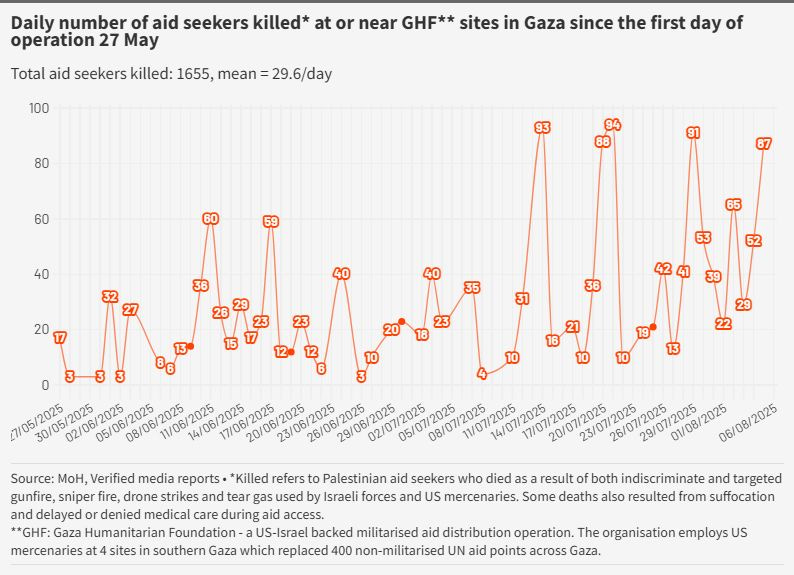
Aguilar, who resigned after witnessing fatal shootings of Palestinians seeking food, stated unequivocally, “Without question, I witnessed war crimes by the Israeli Defense Forces, without a doubt” (Haaretz July 26, 2025)
His mother later confirmed he had been missing for over a month. Amir was just 10 years old, one of the 1,655 aid-seekers executed and among 18,500 children killed since the start of this Thanacide.
The Washington Post published the names and ages of 18,500 Palestinian children who have been killed in Gaza since October 7, 2023.
Picture this: a child who survived starvation, walked half a day for food, only to be murdered within sight of the trucks. Then, imagine the same military responsible — the IDF — later parading with children’s toys, wearing women’s lingerie, and posing for photos against a backdrop of shattered baby dolls, headless and scattered among rubble.
This is not war. This is ritualized degradation. It is the pornography of conquest — a performance of annihilation designed not just to kill, but to desecrate. It is Thanacide in its most obscene form: the destruction of life and the destruction of the moral capacity to mourn it.


Human shields to save dogs — Thanacide as moral inversion
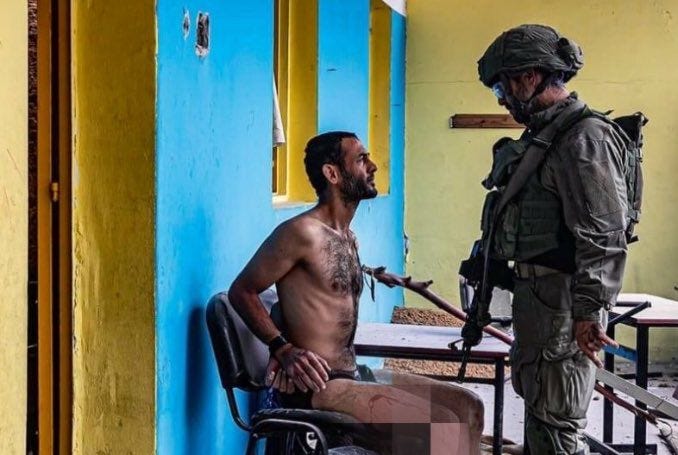
In Haaretz, Gideon Levy documented a grotesque inversion of value so stark it reads like black satire: faced with repeated losses of IDF working dogs in combat zones, military planners decided to send Palestinian civilians ahead as human shields rather than risk more canine deaths.
Levy reports this was not a battlefield improvisation but a calculated policy choice — complete with cost-benefit logic. A dog required months of training and steady supply of specialized food; a coerced human required neither: “no months of training, no expensive Bonzo food, just leftovers from battle rations.”
This is Thanacide in its purest form: the spiritual death of conscience made procedural. And, as human rights group Breaking the Silence has recorded, it operated under a nickname among some soldiers — the “Mosquito Protocol.”
The name is the policy. To call a people “mosquitoes” is to render them vermin: irritants to be swatted, crushed, or poisoned without hesitation, record, or remorse. Under that logic, a dog or even a scouting robot receives more planning, logistical care, and legal protection than a human life.
In the Mosquito Protocol, Palestinians are not human — they are insects. And insects are not mourned: they are crushed, left to rot in the open, shoveled into pits by bulldozers, or left for stray dogs.
Why this is Thanacide
Moral architecture collapsed.
Choosing to preserve the life of a military animal over the life of a civilian is not a tactical preference; it is evidence that the protective scaffolding of conscience has been dismantled. In a functioning moral order, human dignity is the non-negotiable baseline. When that baseline is replaced by an “operational efficiency” calculus, Thanacide is in progress.
Dehumanization ritualized into doctrine.
Nicknaming civilians as “mosquitoes” formalizes contempt into operational language. This isn’t slang—it’s a conceptual downgrade of a population’s humanity, repeated in orders, banter, and after-action reports until it becomes reflex. Levy’s account shows how contempt, once ritualized, licenses atrocity as acceptable action.
Institutional corrosion complete.
Religious invocations from senior officials (like biblical references to “Amalek”), permissive military directives, and uncritical press framing together form an ecosystem in which legal, journalistic, and judicial bodies fail to intervene. Rights groups and clinical witnesses have documented the resulting impunity: when all the guardians of human dignity abdicate, the moral memory of a society dies.
This is why Thanacide is not an abstract term here — it is the precise description of a state in which the moral calculus that should protect the vulnerable has been inverted so completely that a dog’s life is planned for, while a human’s is spent.
Watch the CBS interview with a former IDF soldier below, and for extensive documented evidence that makes Thanacide undeniable, visit the Watermelon Crimes website, which compiles countless videos and reports.
How the two work together — a single system of annihilation
These cases are not isolated crimes or disconnected events. Spectracide and Thanacide are two coordinated arms of a single, brutal architecture designed for total erasure:
Spectracide supplies the feed: staged and recorded killings, official military footage, soldier videos, and drone imagery all convert slaughter into content — a visual spectacle weaponized to numb both domestic and global audiences. This endless stream of images desensitizes, dulls outrage, and sanitizes atrocity, providing cover for the next act of violence.
Thanacide supplies the logic: theological justifications, legal erosion, and horrific moral inversions — such as the “Mosquito Protocol,” where Palestinians are dehumanized to the level of pests to be crushed without remorse — make the spectacle conceivable and even acceptable. Thanacide conditions soldiers and civilians alike to view these acts as righteous and denies victims their basic humanity.
Together, this fusion of spectacle and spiritual decay forms a self-perpetuating machine: one arm kills and records; the other rationalizes and erases conscience. This system does not just destroy bodies — it annihilates the very framework that would resist destruction:
Kill, Film, Sanctify, Repeat.
The machine’s output is not just bodies but a shattered moral grammar — an environment where atrocity is performed and excused in the same breath.
Read as isolated outrages, each story is a horror. Read together through Spectracide and Thanacide, they reveal an intentional system: spectacle that produces compliance; theology and policy that erase empathy. Haaretz’s reporting on “Operation Salted Fish” is Spectracide made doctrine; Gideon Levy’s account of dogs and human shields is Thanacide made practical.
Both must be named, and both must be opposed. The spectacle will not stop because you look; the moral void will not refill because you sigh. Naming is not neutral — it is the first act of resistance.
Foundational Definitions
Terms coined by Phantom Pain, 2025.
Spectracide
Pronunciation: /ˈspɛk.trə.saɪd/ / (SPEK-truh-side)
noun
Definition:
The act or practice of transforming mass death into visual performance, especially when killing is staged, recorded, and distributed as a form of spectacle.
The systematic use of images of death — packaged, captioned, and circulated — to shape perception, justify violence, or diminish moral outrage.
Etymology: From specter (“a haunting image, ghost”) or spectacle + -cide (“killing”). Coined by Phantom Pain in 2025.
Usage note: Spectracide refers not only to the killing itself but to its deliberate transformation into consumable media — such as drone footage, staged photographs, and edited clips — designed to weaponize attention and manipulate narrative.
Example:
“The release of edited drone strike footage was a textbook case of spectracide: the killing became a shareable clip rather than a human tragedy.”
Thanacide
Pronunciation: /ˈθæn.ə.saɪd// (THAN-uh-side)
noun
Definition:
The destruction of the moral and cultural structures that define human life as deserving of care.
The collapse of conscience in policy and practice — when legal, religious, civic, and journalistic systems normalize, justify, or ignore mass killing.
Etymology: From Thanatos (Greek personification of death) + -cide (“killing”). Coined by Phantom Pain in 2025.
Usage note: Thanacide does not necessarily refer to the physical act of killing, but to the death of the ethical frameworks that would otherwise oppose such acts.
Example:
“The routine defense of civilian massacres as ‘necessary’ is not just violence — it is thanacide, the moral death of a society.”
Closing indictment: why B’Tselem was right — and why Spectracide and Thanacide sharpen that verdict
I read B’Tselem’s report and its conclusion is not a rhetorical flourish — it is a forensic determination built on testimony, field evidence, policy documents, and a pattern of public statements by senior Israeli officials and commanders. B’Tselem lays out how, since October 7, 2023, Israel’s campaign in Gaza has changed in kind: mass killing on a scale and with a method that aims at destroying Palestinian society and life. Their judgment is clear and unequivocal: the evidence meets the legal and moral threshold of genocide.
But naming the crime is only the first move. B’Tselem’s report shows what was done and who bears responsibility. What my terms do — Spectracide and Thanacide — is explain how this campaign is engineered and why it keeps working despite outrage. B’Tselem documents the outcomes; Spectracide and Thanacide diagnose the mechanisms.
Spectracide explains how killing is weaponized as content. Haaretz’s whistleblower reporting on “Operation Salted Fish” — soldiers ordered to fire on crowds at aid sites, in some cases jokingly treating it like a children’s game — is not only a policy failure; it is evidence of killing being routinized, filmed, and normalized. When executions become a practiced routine and a feedable spectacle, you have Spectracide: the camera becomes part of the arsenal.
Thanacide explains how the moral architecture is dismantled so that such spectacle can be sanctioned. Gideon Levy’s reporting that the IDF prioritized the lives of dogs over the lives of civilians — substituting coerced human shields rather than risk military dogs — is not a stray cruelty. It is a policy calculus that signals a collapsed ethic: human life treated as instrumental, expendable. That institutional moral inversion is Thanacide — the death of conscience made policy.
Clinical testimony sharpens the picture. Surgeons working in Gaza describe wound patterns and injury clusters among children that medical professionals say are not collateral but intentional targeting — “almost like target practice,” in Dr. Nick Maynard’s words. That clinical evidence corroborates what whistleblowers and videos show: repeated, nonrandom acts that, together, stop looking like chaotic combat and start looking like deliberate extermination.
Human Rights Watch and other international organizations now say that killings at aid-distribution sites are crimes under international law; HRW calls the killings of people seeking food “war crimes.” Those independent legal findings echo B’Tselem’s broader conclusion and point to urgently necessary accountability: criminal investigation, international protections for humanitarian corridors, and loss of impunity for actors who record and celebrate the destruction.
Taken together, the evidence fits a single architecture: kill, film, sanctify, repeat. The spectacle (Spectracide) produces the optics and the social desensitization that dulls outrage; the spiritual erasure (Thanacide) supplies the language, ritual, and policy cover that make the spectacle thinkable and actionable. B’Tselem documents the genocidal outputs. Spectracide and Thanacide name the methods that make that genocide reproduce itself.
This is not abstract theory. The machine’s output is not just dead bodies; it is a shattered moral grammar. It is an information environment where atrocity is performed and excused in the same breath. If B’Tselem’s report is the indictment, then Spectracide and Thanacide are the operational blueprint — how the crime was staged and how conscience was extinguished.
We do not stop at naming. Naming obliges action. Watch B’Tselem’s report and video evidence closely and demand three things: independent international investigations with subpoena power; an end to practices that weaponize aid and view cameras as battlefield tools; and pressure on states and platforms that amplify Spectracide to hold perpetrators and publishers accountable. B’Tselem’s legal and factual case for genocide is overwhelming. But unless we also dismantle the spectacle and rebuild moral institutions, the machine will simply produce new atrocities and new euphemisms.
SUPPORT NOTE
The Phantom Directive remains free by principle.
Public awareness should never be gated.
But real investigative journalism takes resources:
the research, the document forensics, the verification work, the mapping, and the fight against coordinated suppression that follows every one of these reports.
If you can become a paid subscriber, it directly strengthens this project.
If you prefer a one-time gesture, you can buy me a coffee:
buymeacoffee.com/phantompain1984
If neither is possible, sharing this investigation is still an act of resistance.
Either way, participation matters.
The system depends on silence; this project depends on refusal.
— Phantom Pain
Bonus: three videos that close the loop — spectacle, sanctification, and the teaching of hate
1) Two Nice Jewish Boys — podcast clip (podcasters normalizing and celebrating suffering)
Video: clip / episode highlights showing hosts’ genocidal rhetoric — widely discussed in the press and compiled clips are available online (example coverage and clips collected here).
Why watch: this is not fringe talk between private civilians. It is an English-language podcast with a broad audience that openly mocks or celebrates Gazan suffering. When popular, public-facing podcasters normalize sadism and celebrate civilian suffering, they perform ideological reinforcement that helps move Thanacide from private prejudice to public ritual.
How it maps to our terms:
Spectracide: these podcasters often repost footage from IDF main social media account or private Telegram groups, remix violent clips, and frame atrocity as a subject for entertainment. That turns footage into content and outrage into a spectacle that feeds algorithms.
Thanacide: their rhetoric corrodes empathy in public culture; it teaches listeners that Palestinian suffering is pleasurable or justified, which helps dismantle moral restraints and makes actual policy violence easier to defend.
2) Interview circulated by Palestinian social-media networks — a young British-born man reporting extremist rhetoric being taught in UK classes
Video / clip: a viral interview circulated by Palestinian social-media influencer (Hamza) in which a UK-born Jewish teen recounts having heard genocidal or exterminatory rhetoric taught or normalized in some religious classes. (Reporting and circulation of similar testimony are documented in recent investigative pieces.)
Why watch: this clip moves the problem beyond the immediate combat zone. It shows how hateful doctrine, performed and circulated, migrates into diaspora communities and classrooms — the export of doctrines that fuel Thanacide.
How it maps to our terms:
Spectracide: the clip’s circulation online turns private confession into public spectacle; footage of hate is re-shared and normalized.
Thanacide: more critically, the clip demonstrates how theological or curricular instruction can inculcate annihilationist thinking at home — teaching future generations an ethic that dehumanizes and sanctifies killing.
3) Tantura documentary clips — memory, confession, and a culture of laughing at atrocity
Video: Tantura (Alon Schwarz) — interviews with Israeli veterans and archival material about the 1948 Tantura massacre; sections of the film show former participants recalling and sometimes laughing about atrocities.
Why watch: Tantura places the current violence in historical continuity. It shows how wartime atrocity has sometimes been buried in national myth, commemorated lightly, or even joked about — all of which helps produce a public culture willing to normalize and repeat mass violence.
How it maps to our terms:
Spectracide: the documentary demonstrates how stories, confessions, and archived footage become part of a national feed that shapes perception. When past atrocity is laughed about on camera or in interviews, it becomes an element of the spectacle that normalizes future spectacle.
Thanacide: the film proves that ritualized dehumanization and celebratory attitudes toward mass killing have historical roots — a culture that laughs at, conceals, or ritualizes atrocity is a culture at risk of spiritual collapse.
Eulogy for Anas al-Sharif
A nation of silenced voices
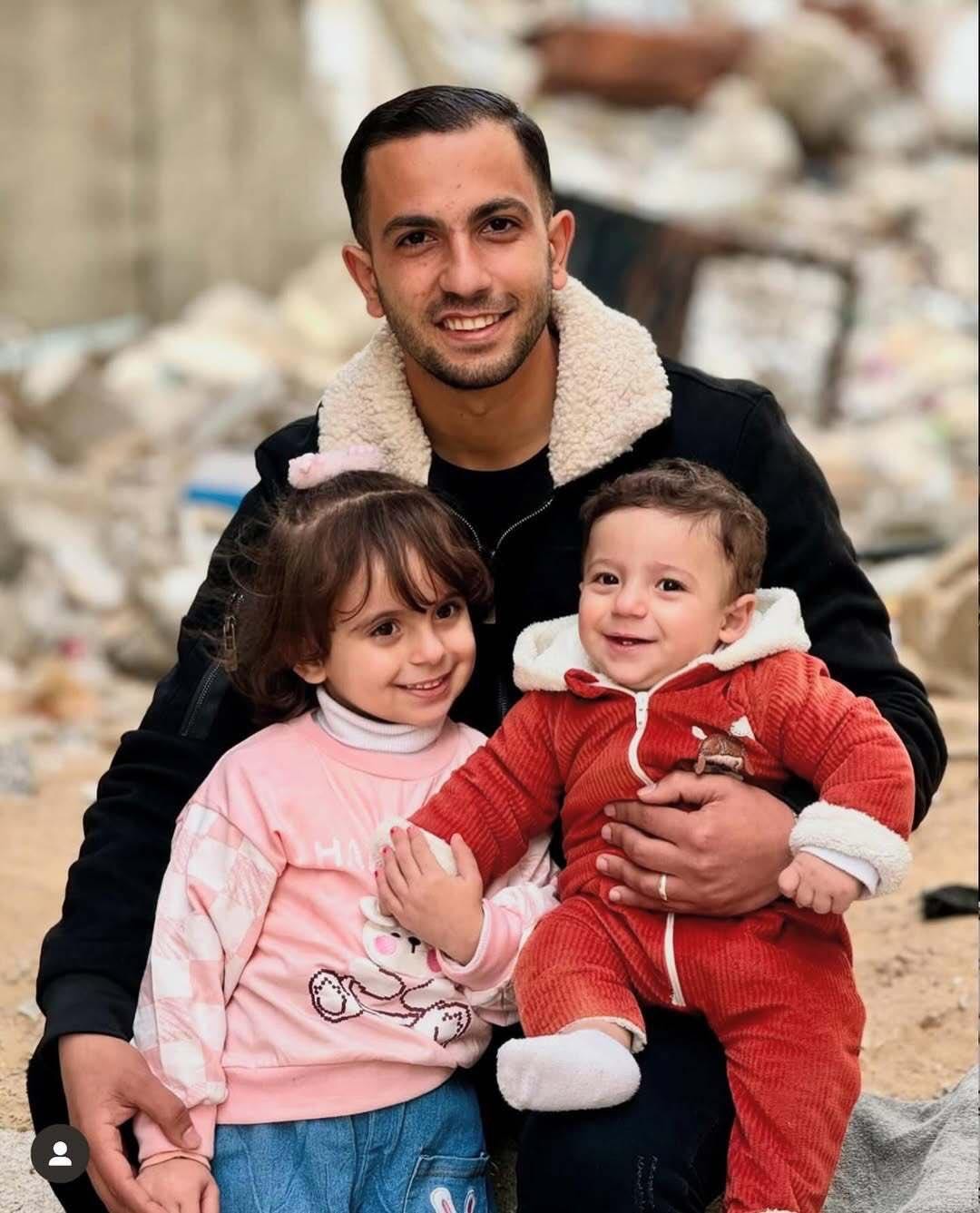
Today — 10 August 2025
I was finishing this report when the strike happened. A tent outside al-Shifa Hospital where journalists sheltered was hit. Among the dead: Anas al-Sharif, Al Jazeera’s Gaza correspondent — a reporter who refused to leave northern Gaza and whose last broadcasts said plainly: “This is a message from North Gaza. Even if Israel kills me, the message will not stop.” He was killed after weeks of public smears and threats. Source: Committee to Protect Journalists
This was not collateral. It was execution by narrative and missile. The IDF publicly claimed responsibility and framed Anas as a Hamas operative — a smear that preceded the killing and that was amplified across state and social channels. Al Jazeera, press-freedom groups and eyewitnesses reject the IDF’s claim; CPJ had warned weeks earlier that Anas was being prepared as a target through a deliberate incitement campaign.
The pattern of lies and the precedent of murder
This is not a one-off. The killing of journalists in Gaza is part of a documented pattern in which Israeli authorities issue false or misleading claims, then use those claims to justify lethal actions — and to bury the truth in spectacle.
Shireen Abu Akleh (2022): When Al Jazeera’s Palestinian-American journalist Shireen Abu Akleh was shot dead while covering an IDF raid in Jenin, Israeli officials initially denied responsibility, floated alternative narratives, and delayed transparent accountability. Independent forensic analyses (including The Washington Post and UN findings) pointed to likely Israeli fire; yet there has been no credible criminal accountability and Israel resisted a full, independent investigation for months. The Abu Akleh case became a template: denial, delay, distortion.
Al-Shifa claims: Israeli officials repeatedly insisted al-Shifa was a Hamas command center. Independent press investigations, forensic reviews, and expert reporting have shown that the evidence publicized by Israel was inconsistent, selectively edited, or weak — and that some underground structures were built long before Hamas’s rise. Former Israeli Prime Minister Ehud Barak said “bunkers underneath Shifa Hospital in Gaza had been built by Israeli engineers decades ago”. Those official claims were used to justify repeated raids on the hospital complex.
This is how the machinery works: manufacture or amplify a narrative → weaponize it into legal/military justification → strike → release footage or claims to shape public memory. The Abu Akleh killing, the repeated Al-Shifa claims, and now Anas’s assassination are not isolated errors — they are a practice of state deception backed by force.
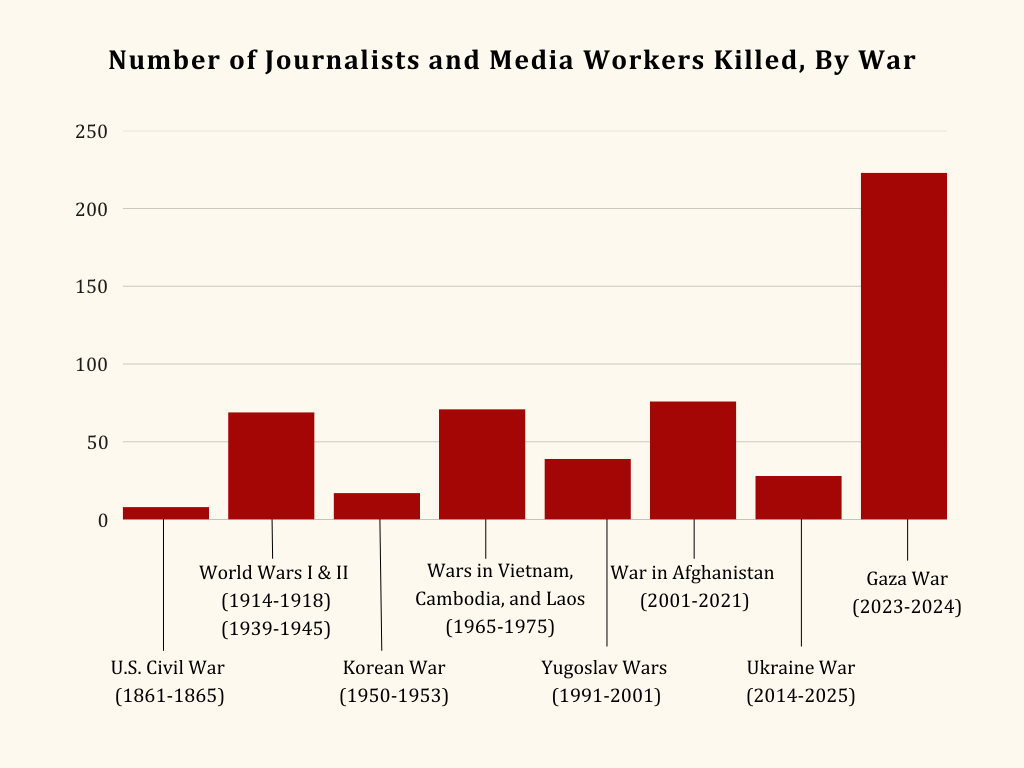
The Demand — No Platform for Israel’s War Propaganda
Anas al-Sharif’s killing is not just an attack on one journalist.
It is an attack on truth, memory, and all of us.
The condemnations pouring in from around the world are not enough.
Sorrow without action is surrender.
Our single, non-negotiable demand:
Every mainstream media outlet must END all invitations, interviews, and live appearances for Israeli military and government officials — until independent international journalists and forensic investigators are allowed unrestricted entry into Gaza.
This is not about “balance.” This is about refusing to give airtime to the accused while they block the evidence from entering. If Gaza is truly what Israel claims, they should have nothing to fear from international scrutiny. The refusal to allow it speaks louder than any soundbite they deliver.
The precedent is clear:
The Committee to Protect Journalists (CPJ) and Reporters Without Borders (RSF) have held officials accountable in other countries when their rhetoric and propaganda directly preceded journalists’ murders — in Mexico, the Philippines, Myanmar, and more.
They documented the threats.
They named the inciters.
They pushed for sanctions.
They treated those who spread incitement as participants in the crime — not as credible voices.
We must do the same now.
This is the line:
No more normalizing war propaganda.
No more hosting the mouthpieces of a regime that murders journalists while sealing the borders to independent eyes.
No more laundering lies into news.
If we accept this, humanity itself is broken.
If we reject it, we begin the work of repairing it.
Final words
Anas did not die for Hamas. He died for the truth. His death is a historic threshold: when a regime kills reporters with impunity, and when the world still plays the neutral commentator, the meaning of “free press” collapses. That collapse is Spectracide and Thanacide in tandem — spectacle and spiritual death.
We will not let him vanish into a government press release. We will archive, we will litigate, and we will turn the cameras back on. We will not let the murder of a witness be normalized or celebrated.
— Phantom Pain
Wake up world. This is hell on earth. Where is our integrity and our humanity? Genocide, Spectracide and Thanacide MUST BE STOPPED NOW by all who still have a moral compass. As we give, so shall we receive...
The zionscum went Nutsos when this Incredible Truthful Graffiti was revealed
Brilliant